Exploring the Versatility of Shop Icons in Modern Design
Understanding the Shop Icon: A Comprehensive Overview
The Shop Icon is a versatile and widely recognized symbol used across various platforms, from e-commerce websites to mobile applications. This simple yet effective graphic serves as a visual shorthand, instantly guiding users to shopping-related functions or sections. Its simplicity and clarity make it an indispensable element in user interface (UI) design.
The Anatomy of a Shop Icon
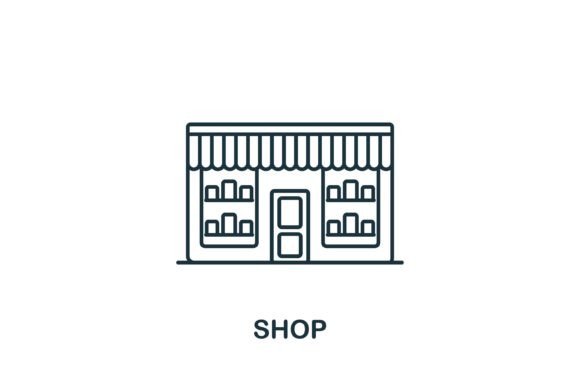
A typical Shop Icon features a stylized representation of a shopping bag, cart, or storefront. These designs are often rendered in a minimalistic style, using clean lines and basic shapes to ensure they are easily recognizable and scalable. The use of a simple line element in the design not only enhances its aesthetic appeal but also ensures that it can be seamlessly integrated into a wide range of design projects.
Why Use a Shop Icon?
Incorporating a Shop Icon into your design offers several advantages:
- Enhanced User Experience: The icon provides a clear and intuitive way for users to identify and access shopping functionalities, improving overall navigation and usability.
- Brand Consistency: A well-designed Shop Icon can complement and enhance your brand's visual identity, making it a cohesive part of your overall design strategy.
- Versatility: The icon's simplicity allows it to be used in various contexts, from web pages to mobile apps, and even in print materials.
Technical Flexibility and Ease of Use
The Shop Icon is typically provided in multiple file formats, including EPS, JPG, AI, and SVG. This variety ensures that the icon can be easily edited and used across different platforms and software. For instance, vector formats like EPS and AI allow for easy scaling without loss of quality, while raster formats like JPG are suitable for web and print use.
E-commerce Websites
On e-commerce platforms, the Shop Icon is often used to direct users to their shopping carts or to highlight special deals and promotions. Its presence on the page helps to streamline the shopping experience, making it easier for customers to complete their purchases.
Mobile Applications
In mobile apps, the Shop Icon is a key component of the UI, often appearing in the main navigation bar or as a floating action button. This placement ensures that users can quickly access shopping features, enhancing the app's functionality and user engagement.
Infographics and Marketing Materials
The Shop Icon is also a valuable asset in creating infographics and marketing materials. It can be used to visually represent shopping data, trends, and statistics, making the information more engaging and accessible to the audience.
Design Integration
When integrating the Shop Icon into your design, it's important to consider the overall aesthetic and color scheme. The icon should complement the existing design elements and not clash with them. Additionally, ensuring that the icon is appropriately sized and positioned is crucial for maintaining a clean and professional look.
User Accessibility
Accessibility is another critical consideration. The Shop Icon should be designed and implemented in a way that is inclusive and accessible to all users, including those with visual impairments. This can be achieved by using high-contrast colors and providing alternative text descriptions where necessary.
Evolution of the Shop Icon
As design trends evolve, so too does the Shop Icon. Modern designs often incorporate more dynamic and interactive elements, such as animations and hover effects, to create a more engaging and responsive user experience. Additionally, the rise of dark mode in UI design has led to the development of icons that are optimized for both light and dark backgrounds.
Adapting to New Technologies
With the advent of new technologies, such as augmented reality (AR) and virtual reality (VR), the Shop Icon is likely to play a role in these emerging fields. For example, AR applications may use the icon to guide users to virtual shopping experiences, while VR environments could integrate the icon into interactive 3D interfaces.
Conclusion
The Shop Icon is a powerful and versatile tool in the designer's arsenal. Its simplicity, flexibility, and universal recognition make it an essential element in a wide range of design projects. By understanding its characteristics, advantages, and potential applications, designers can effectively leverage the Shop Icon to enhance user experiences and achieve their design goals.